Decoding the DNA of Carnatic Music

SOUND . CODE . CONSCIOUSNESS

A bioinformatic study mapping 102 Carnatic composers across 14 centuries - tracking raga evolution, tala patterns, and the physiological frequencies that connect ancient music to modern neuroscience.

Composers
0
Centuries
0
Core Ragas
0
Talas Mapped
0

INTRODUCTION

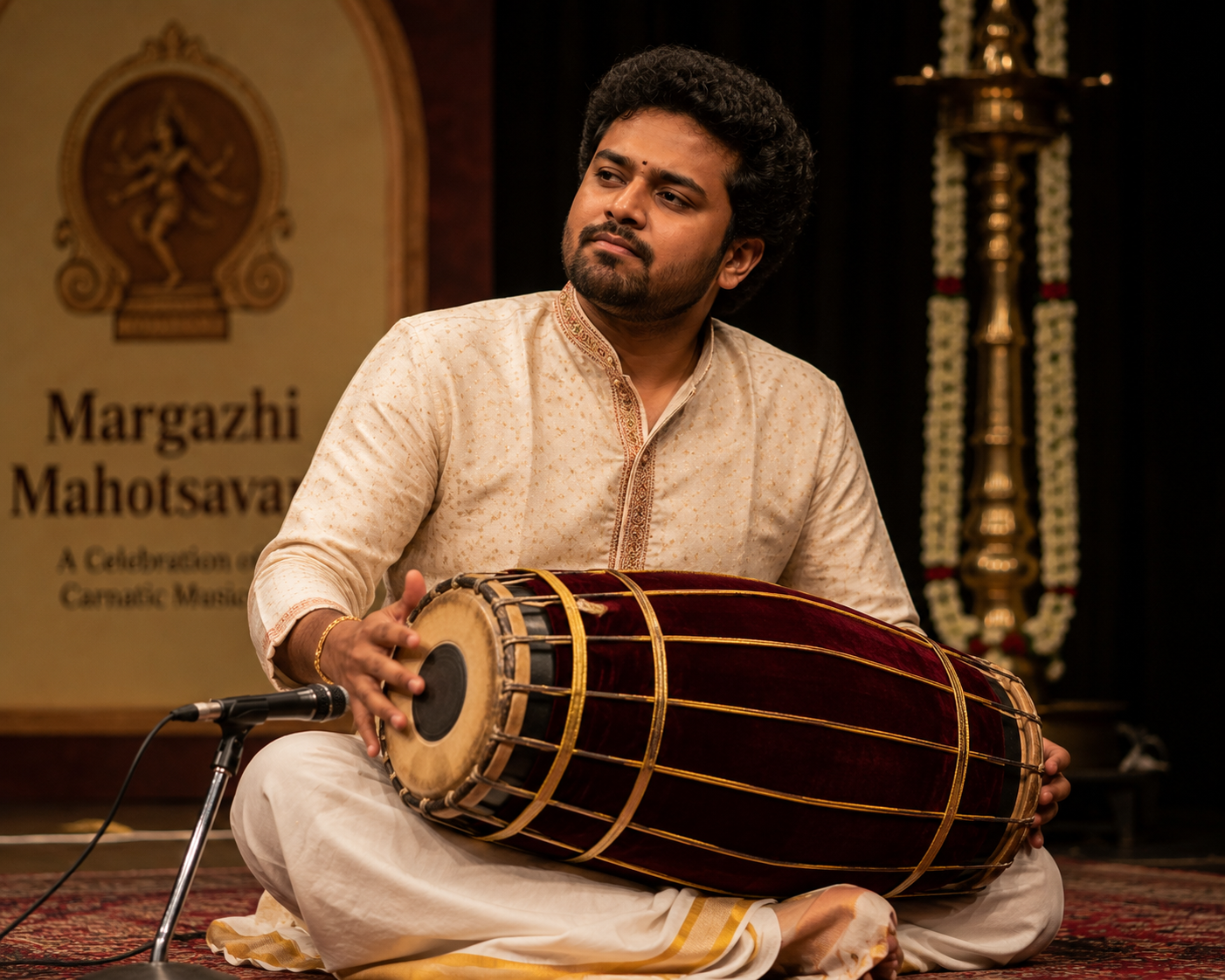
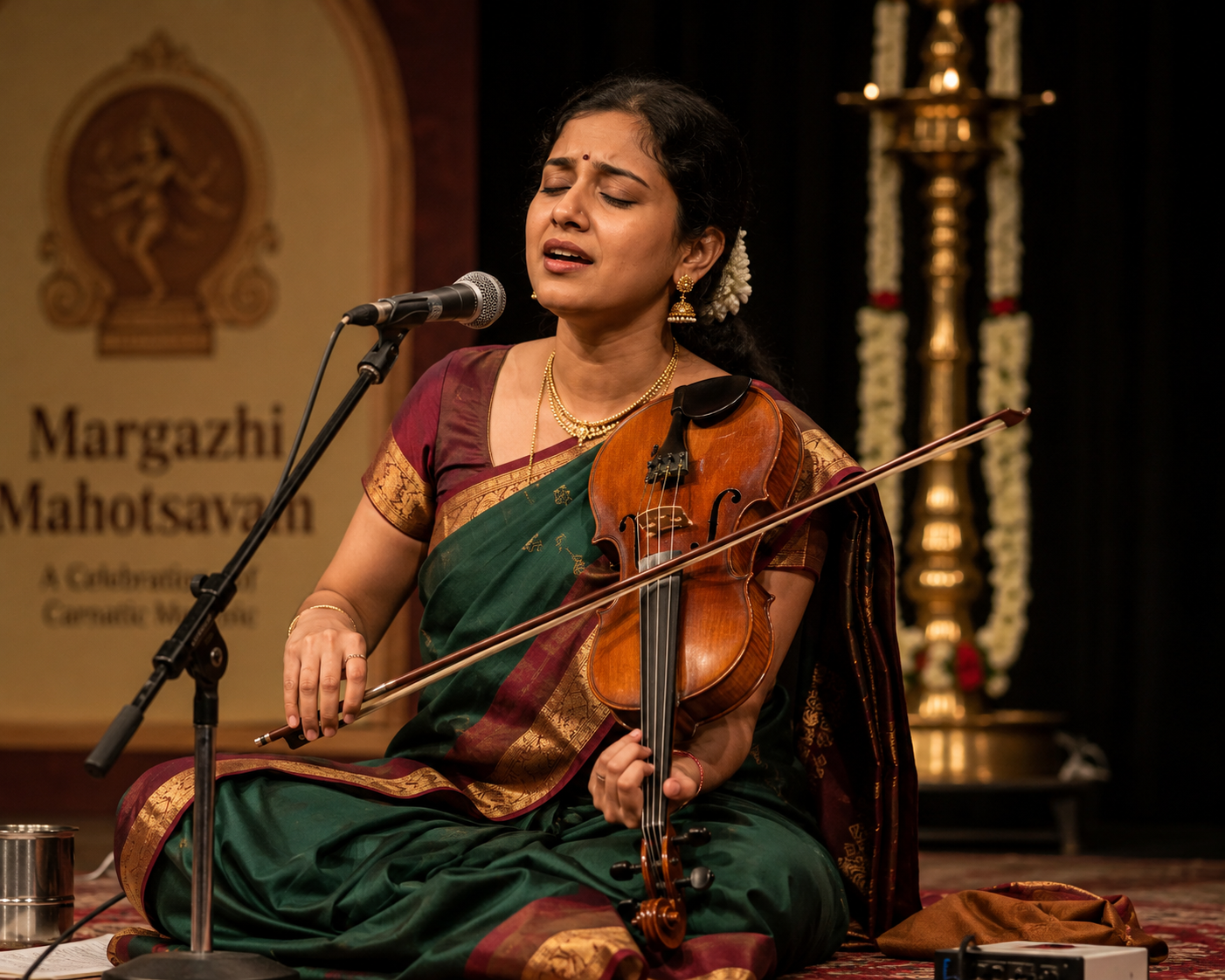
Carnatic music is a classical tradition from South India, known for its intricate melodies, rhythmic sophistication, and strong emphasis on vocal expression. Rooted in ancient Hindu scriptures-especially the Sama Veda-this tradition has evolved over centuries while preserving its spiritual and cultural depth.

SWARAS

A swara is a musically significant pitch. The seven fundamental notes, Sa, Ri, Ga, Ma, Pa, Da, Ni-form the Sapthaswaras. These notes repeat cyclically across three registers: Mandra (low), Madhya (middle), and Taara (high).Sa and Pa are Prakriti Swaras (fixed notes), while Ri, Ga, Ma, Da, and Ni are Vikruthi Swaras (variable notes). Together, they create 16 distinct pitch possibilities within the octave:

S

Shadjam

R1

Shuddha Rishabham

R2

Chathushruthi Rishabham

R3

Shatshruthii Rishabham

G1

Shuddha Gandharam

G2

Sadharana Gandharam

G3

Anthara Gandharam

M1

Shuddha Madhyamam

M2

Prathi Madhyamam

P

Panchamam

D1

Shuddha Dhaivatham

D2

Chathushruthi Dhaivatham

D3

Shatshruthi Dhaivatham

N1

Shuddha Nishadham

N2

Kaishiki Nishadham

N3

Kakali Nishadham

RAGAS

A raga is a melodic framework defined by a specific sequence of swaras, characteristic phrases, and ornamentations (gamakas). Each raga evokes a distinct emotional flavor—devotion, joy, serenity, or longing-and is structured through its Arohanam (ascending scale) and Avarohanam (descending scale).

Melakarta ragas are the 72 parent ragas containing all seven notes in both ascent and descent. Janya ragas are derived from Melakarta ragas by modifying note patterns-adding, omitting, or rearrangingswaras.

TALAM

Talam is the rhythmic cycle that provides structure and timing to Carnatic music. Each tala has a unique pattern of beats, forming the backbone of compositions and improvisations.

Swara Genomics — Sound · Code · Consciousness

A Computational Archive

Decoding the
DNA of Carnatic Music

Sound  ·  Code  ·  Consciousness

A bioinformatic study mapping 102 Carnatic composers across 14 centuries — tracking raga evolution, tala patterns, and the physiological frequencies that connect ancient music to modern neuroscience.

102
Composers
14
Centuries
15
Core Ragas
8
Talas Mapped
Explore

The Numbers Speak

🎵
66
Composers used Kalyani — the single most dominant raga across all eras
🥁
82
Composers used Adi Tala — the universal 8-beat cycle of Carnatic music
🧬
M2
Kalyani's dominant swarasthana — prati madhyama induces alpha brainwaves and serotonin release
📜
7th c.
Earliest composers mapped — Tirugnana Sambandar & Karaikkal Ammeiyar — over 1,300 years of tradition
"Kalyani is the single most used raga across 66 composers, and Adi Tala is used by 82 of 102 composers. Together they form the unbroken backbone of the Carnatic repertoire — from the 7th century to today."

Raga & Tala Frequency

Most used ragas — by composer count
Most used talas — by composer count

Ragas, Talas & Bioinformatics

#ComposerCenturyTop RagaTalamMost Famous Compositions

About Swara Genomics

"Every raga is a frequency. Every tala is a rhythm. Together, they are the genome of Carnatic music."

Swara Genomics is a student-led computational research project that applies bioinformatic methodology to Carnatic classical music. By treating ragas as genetic sequences — analysing their frequency patterns, cross-composer usage, and physiological effects — the project builds the first structured data archive mapping 1,300 years of this ancient tradition.

The research bridges music theory, neuroscience, and data science: mapping raga swarasthanas to physiological frequencies, tracking tala patterns across centuries, and documenting the composers who shaped this living tradition.

🎵
Sound
Mapping 15 ragas across 102 composers spanning 14 centuries
🧬
Code
Python-driven frequency analysis, raga evolution tracking, and bioinformatic visualisation
🧠
Consciousness
Linking raga swarasthanas to brainwave states, neurotransmitters, and therapeutic applications
Swara Genomics  ·  Sound · Code · Consciousness

A computational archive of Carnatic music  ·  Research project by Sangeetha Vidwan